
What is Ayurveda?
Ayurveda one of the world’s oldest traditional systems of medicine. Originating in India and deeply connected to the 6 Darshenas (the “sights” schools of thought) from India. In particular, it is connected to Samkhya and Yoga Darshanas.
Samkhya Darshana: Provides the evolutionary model of creation used in Ayurveda. This includes the concepts of Purusha (consciousness), Prakriti (matter), Mahat (intellect), Ahamkara (ego), and the five basic elements (Pancha Mahabhutas): earth, fire, water, air and space.
Yoga Darshana: Informs the lifestyle, mental control, and spiritual aspects of healing, emphasizing the unity of body, mind and soul.
Therefore, Ayurveda is the Science of Life (or longevity). It groups individuals into three doshas (constitutions) based on their parents’ make up and their own unique material. The three doshas are Vata (Air and Space), Pitta (Fire and Water), and Kapha (Water and Earth).
An individual inherits part of their parents constitutions at the moment of conception and brings in their own qualities to take form in physical form (prakriti) or body.
Ayurveda believes that food is medicine. Each constitution/individual should be eating the appropriate things to synergistically help the system function better and increase longevity. In addition, Ayurveda is concerned with lifestyle, habits and mindfulness. This is where Yoga (that which you connect to regularly) plays a large role in working with Ayurveda.
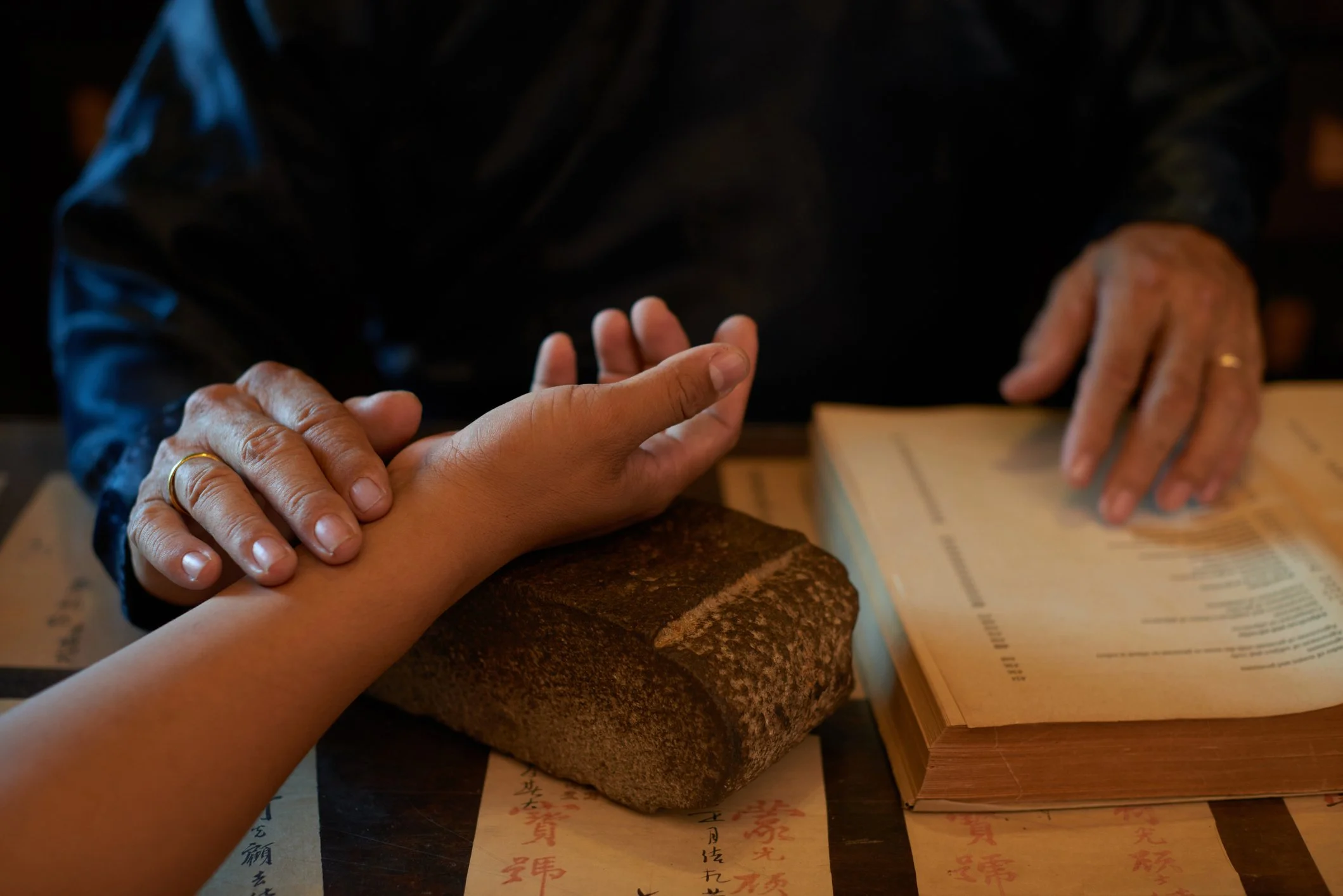
An Ayurvedic practitioner or doctor, will read your seven pulses, as way to see how the seven dhatus (or tissues) are operating/functioning. Within each tissue they will feel for vatta, pitta or kapha. As a way to achieve longevity, the system works to bring an individual into balance for their own constitution.
For example, a person that is primarily Pitta in nature, should never be expected to become Vatta or Kapha; although lifestyle can often have a very large impact on their system. Ayurveda works to have the individual be well balanced as a pitta through diet and herbs, lifestyle choices and habits, and finally mindfulness including yoga postures, pranayama (breathing practices) and meditation.
The Ayurvedic system is a very different lens to western medicinal system. It has an integrative perspective that believe that opposite qualities can balance the system and promote healing. It has a large focus on the Gunas, the three fundamental forces in nature; Sattva: Represents balance, harmony, purity and wisdom. It brings clarity, peace and spiritual light. Rajas: Represents activity, passion, movement, and desire. It drives action and ambition, but can lead to stress or anxiety when out of balance. Tamas: Represents inertia, darkness, heaviness, and ignorance. It causes stability or rest, but excess can lead to laziness, confusion, or depression.
Therefore, Ayurveda may find links between your diet, skin conditions, emotional well being and even your natural state.
In order to become a Licensed Yoga Therapist, I studied 2 years of Ayurveda. I am not a licensed practitioner. I have a lot of respect for the system and use its principles with my clients regularly. I have also found that many of the principles support my well being in daily activities. Should you want to know more or ask for a referral please reach out to me directly.
Please look out for the upcoming newsletters that will include more information and details about many of these concepts. You can even subscribe if you click the link!